

+20 qualified and recognized expert speakers, including:

Emmanuel de Garsignies
Operating Partner

Nodijalem Myaro
Handball Olympic Champion Mental coach

Philippe de Fitte
Operating Partner
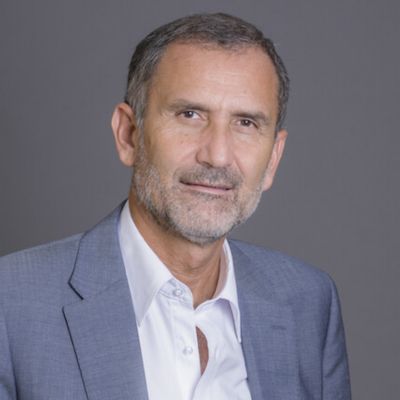
Guy Mamou-Mani
Founder OPEN Group (Euronext)

Philippe Attal
Expert stratégie réseaux sociaux

Sophie-Moreau-Garenne

Guillaume-Attias
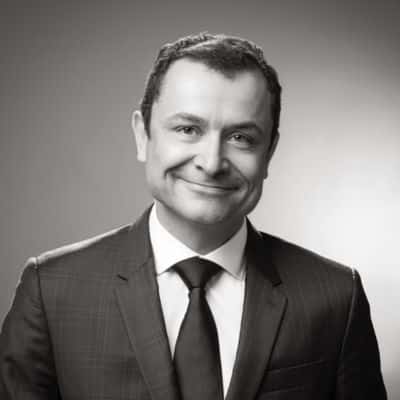
Arnaud-Pedron

Alexandre AIDOUDI
M&A expert

Frédéric Bardeau
President and co-founder at Simplon.co

Baptiste Lafon
Trainer and Facilitator – Décalez!
Assessment methods:
Diagnostic assessments: positioning test at the beginning of the training program
Formative assessments: reconstructed professional scenarios, multiple-choice questionnaires (MCQs), action plan
Summative assessment: the final evaluation consists of three parts:
Based on a real-life situation or a reconstructed case study of an Operating Partner mission within a company, the candidate prepares:
- a technical report composed of: a summary of the strategic diagnostic investigation process the value creation plan the formalization of the mission proposal The deliverable will be presented orally before a panel of industry professionals.
- a technical report composed of: a detailed action plan including a risk analysis a description of the implementation and co-piloting methodology, both in technical terms and in terms of a peer-to-peer support process with the company’s leader the structuring of a mobilizable expert network the implementation of a systemic strategic monitoring system a mission review including a projection for the company’s future development
- a technical report on the candidate’s support approach with the company’s leader, including a presentation intended for investors
The three reports are presented orally before a panel of industry professionals.
Teaching methods:
Operating Partners Academy promotes an “active” learning method that places the learner at the center of the program. The learner becomes the main actor in their own training. The approach is built on three interconnected pillars: experiential learning, social learning, and gamification-based learning.
Training alternates between theory (30%) and practical professional application (70%), including case studies, simulated professional scenarios, group workshops, and more.
Context:
The Operating Partner profession operates in an economic environment characterized by increasing instability and the growing complexity of challenges faced by companies.
Today, companies evolve in a so-called “VUCA” environment marked by overlapping economic, health, geopolitical, and environmental crises, which weaken traditional business models and increase performance demands. In this context, executives must navigate simultaneous transformations: accelerated digitalization, integration of artificial intelligence, environmental transition, and rising governance requirements.
At the same time, rising interest rates and the end of abundant liquidity have profoundly reshaped the private equity model, shifting value creation from a financial logic to an operational one. As a result, the Operating Partner role is developing across sectors heavily exposed to these transformations, particularly: private equity and venture capital, high-growth companies (start-ups, scale-ups), SMEs and mid-sized companies undergoing transformation or structuring, and businesses facing performance, governance, or strategic repositioning challenges.
All sectors are affected, demonstrating that the profession addresses common challenges of transformation, growth, and value creation.
